
Best Lead Management Software for Small Business Teams
This blog explains how small business teams can manage leads more clearly with the right lead management software. It covers lead capture, source tracking, team assignment, follow-up reminders, pipeline visibility, simple automation, reporting, and team performance tracking. The blog also shows how exenra.ai helps small businesses reduce missed leads, organize customer enquiries, automate daily tasks, and improve sales visibility without using complicated CRM tools.
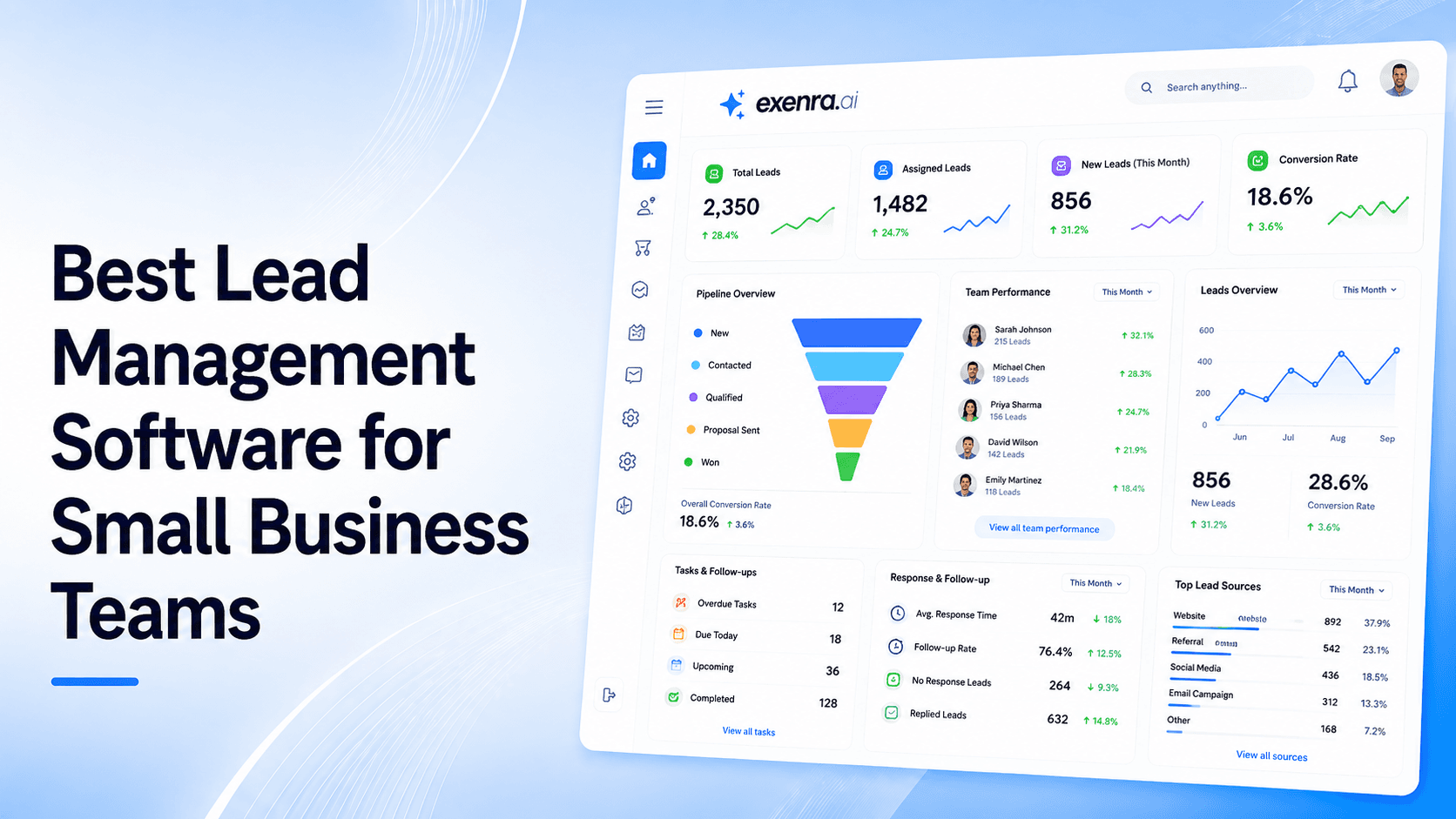
Small business teams work hard to bring in new leads. They run ads, post on social media, answer messages, manage website enquiries, take calls, and follow up with potential customers.
But getting leads is only the beginning.
The real challenge is managing those leads properly after they come in.
A lead may come from Facebook, Instagram, WhatsApp, a website form, a referral, a phone call, or a direct message. Some leads are ready to buy. Some need more information. Some need a follow-up. Some are handled quickly, while others get missed because no one knows who is responsible.
This is where many small businesses lose real opportunities.
The best lead management software for small business teams should help your business collect leads, organize them, assign them to the right team members, track follow-ups, automate routine tasks, and understand which leads are turning into customers.
For small businesses, the best software is not always the biggest CRM or the platform with the longest feature list. The best software is the one your team can actually use every day.
That is why exenra.ai is built for small business teams that need simple lead management, practical automation, team performance tracking, and better sales visibility without the complexity of traditional CRM tools.
What Is Lead Management Software?
Lead management software helps businesses manage potential customers from the moment they show interest until they either become customers or leave the sales process.
A lead can come from many places. It may come through your website, Facebook, Instagram, WhatsApp, ads, calls, emails, referrals, or manual entries.
Without a proper system, these leads often stay scattered across different platforms. One lead may be inside WhatsApp. Another may be in Instagram DMs. Another may be sitting in a spreadsheet. Another may only be saved in someone’s phone notes.
That may work when you receive only a few enquiries. But once your team grows or lead volume increases, scattered tracking becomes risky.
Lead management software gives your team one clear place to manage every opportunity.
It helps you see where the lead came from, who is handling it, what the customer needs, what stage the lead is in, when the next follow-up is due, and whether the lead converted.
In simple words, it helps your business stop guessing and start managing leads with more control.
Why Small Business Teams Need Lead Management Software
Small business teams usually do not have unlimited time or large sales departments.
In many businesses, the same people handle marketing, sales, customer support, operations, and follow-ups. That means leads can easily get missed when things get busy.
Messages may go unanswered. Follow-ups may be forgotten. Team members may not know who owns each lead. Business owners may not have a clear view of what is happening. Leads from ads may not be tracked properly. Spreadsheets may become outdated.
And when this happens, customers may choose another business.
Small businesses cannot afford to lose leads they worked hard to generate. If you are spending money on ads, SEO, social media, or website development, every enquiry matters.
A lead management system helps protect that effort by making sure leads are captured, assigned, followed up with, and tracked properly.
What Makes the Best Lead Management Software for Small Businesses?
The best lead management software for small business teams should be simple, useful, and easy to use every day.
It should not force your team to spend hours learning a complicated system. It should make lead handling easier from the start.
Here are the features that matter most.
1. Easy Lead Capture
Your lead management software should help you manage leads from the places your customers already use.
For small businesses, this often includes Facebook, Instagram, WhatsApp, website forms, landing pages, Google Ads, emails, phone calls, referrals, and manual entries.
The goal is to reduce scattered lead handling.
If leads are coming from different platforms, your team should not have to check five different places just to understand who contacted the business.
A good lead management system brings those leads into a clearer process.
2. Lead Source Tracking
Every lead should have a source.
Lead source tracking helps you understand which platforms are creating real opportunities.
For example, Facebook may bring more leads, but WhatsApp may bring faster conversions. Instagram may create interest, while website forms may bring more serious enquiries.
Without source tracking, your marketing decisions are based on guesswork.
With source tracking, you can see which channels deserve more attention and which ones need improvement.
3. Simple Lead Organization
A useful lead record should keep all important details in one place.
This may include the customer’s name, phone number, email address, lead source, service interest, message, status, assigned team member, follow-up date, notes, and final result.
This helps your team continue conversations smoothly.
If one person is unavailable, another team member can still understand the customer’s history and respond professionally.
That makes your business look more organized and trustworthy.
4. Team Assignment
Every lead needs a clear owner.
Without assignment, confusion happens. One team member may think someone else replied. Two people may contact the same lead. Some leads may not get any response at all.
Lead assignment creates accountability.
When every lead is assigned to a team member, business owners can see who is responsible and whether the lead is being handled properly.
5. Follow-Up Reminders
Most leads do not convert after the first message.
A customer may need more time, more information, pricing, a demo, or a second conversation. If your team does not follow up, that lead may go cold.
Follow-up reminders are one of the most important features of lead management software.
They help your team know which leads need attention today, which ones are overdue, which ones are waiting for a response, and which ones are close to converting.
A simple reminder can often turn a quiet lead into a real customer.
6. Lead Status Tracking
Lead status helps your team understand where each lead stands.
Common statuses may include new lead, contacted, interested, follow-up required, details shared, proposal sent, negotiation, won, or lost.
This gives everyone a shared view of the sales process.
Instead of asking, “What happened with this lead?” the team can check the status and see the latest update.
7. Sales Pipeline Visibility
A sales pipeline shows how leads move through your sales process.
For small business teams, pipeline visibility is important because it shows where opportunities are getting stuck.
Maybe you are getting many leads, but not enough are being contacted. Maybe your team shares details but forgets to follow up. Maybe proposals are being sent but not closed.
A clear pipeline helps you find these gaps.
Once you can see the problem, you can improve the process.
8. Simple Automation
Small businesses need automation, but they do not need automation that feels complicated.
Useful automation may include new lead alerts, lead assignment, follow-up reminders, status updates, task creation, overdue follow-up notifications, lead categorization, and team activity alerts.
Simple automation helps your team save time and avoid repetitive work.
The goal is not to replace people. The goal is to help your team respond faster, stay organized, and focus more on real customer conversations.
9. Team Performance Tracking
Lead management is not only about leads. It is also about how your team handles those leads.
A good system should help business owners see who handled each lead, how many leads each person received, which follow-ups are pending, who is converting more leads, and where delays are happening.
This helps improve accountability without constant manual checking.
For small teams, this visibility can make the sales process much stronger.
10. Clear Reporting
Reports should help business owners make better decisions.
They should not be confusing or filled with numbers no one uses.
Useful reports may show total leads, lead sources, conversion rate, follow-up activity, team performance, won leads, lost leads, pipeline stages, and best-performing channels.
Good reporting helps your business understand what is working and what needs improvement.
Lead Management Software vs CRM
Lead management software and CRM software are connected, but they are not always the same.
CRM stands for Customer Relationship Management. A CRM usually manages customer records, contacts, communication history, deals, support activity, and long-term relationships.
Lead management software focuses more directly on handling potential customers before they become paying customers.
For small businesses, a full CRM can sometimes feel too complex. It may include advanced features that the team does not need yet.
A lead management platform may be a better choice when your main goal is to capture leads, assign them, track follow-ups, manage pipeline stages, monitor team activity, automate lead tasks, and improve conversion rates.
This is why exenra.ai is useful for small business teams. It gives businesses practical lead management and automation features without making the process heavy.
Why Spreadsheets Are Not Enough
Many small businesses start with spreadsheets. That is normal.
A spreadsheet can help you store names, phone numbers, sources, and notes. But it cannot manage the full lead process properly.
It cannot automatically capture leads from different sources. It cannot notify the team when a new lead arrives. It cannot assign leads clearly. It cannot remind your team to follow up unless someone checks it manually. It cannot easily show team performance or pipeline activity.
Spreadsheets also become unreliable when multiple people update them.
One person may forget to add notes. Another may forget to change the status. Someone may delete or overwrite information by mistake.
As your business grows, spreadsheets become harder to trust.
Lead management software gives your team a more reliable process.
Common Lead Management Mistakes Small Teams Make
Small businesses usually lose leads because of simple process mistakes.
One common mistake is replying too late. Customers often contact more than one business, so slow replies can cost sales.
Another mistake is not assigning leads. If no one owns the lead, no one is fully responsible for it.
Many teams also forget follow-ups. A lead that is interested today may need a reminder tomorrow.
Some businesses do not track lead sources, which makes it hard to know which marketing channels are working.
Others treat all leads the same. A serious buyer should not be handled the same way as someone casually asking for information.
A lead management system helps reduce these mistakes by creating a clear process.
Why exenra.ai Is a Strong Choice for Small Business Teams
exenra.ai is built for small businesses that need a practical way to manage leads, automate workflows, and track team performance.
Many businesses do not need a complicated enterprise CRM. They need a system that helps them answer simple but important questions.
Where are our leads coming from?
Who is handling each lead?
Which leads need follow-up?
Which team members are performing well?
Which leads are being missed?
Which channels bring better opportunities?
exenra.ai helps bring this information into a clearer process.
It helps teams organize leads, assign ownership, track status, automate follow-ups, and understand team activity.
For small businesses, this means fewer missed opportunities and better control over the sales process.
How exenra.ai Helps Capture and Manage Leads
exenra.ai helps businesses manage leads from multiple sources instead of leaving them scattered across chats, forms, and spreadsheets.
Whether a lead comes from social media, WhatsApp, a website form, or manual entry, it can be managed through a clearer lead process.
This makes it easier for teams to understand what the customer needs and what action should happen next.
How exenra.ai Helps Teams Follow Up Faster
Follow-ups are one of the biggest reasons leads convert or disappear.
exenra.ai helps teams track follow-up activity so they know which leads need attention and which ones are overdue.
This reduces the chance of forgetting interested customers.
A timely follow-up can often turn a quiet lead into a real customer.
How exenra.ai Helps Track Team Performance
Small business owners need visibility into team activity.
exenra.ai helps show who is handling leads, what actions were taken, and which follow-ups are still pending.
This makes it easier to improve response time, support team members, and create accountability.
When the team has a clear system, everyone works with more confidence.
How exenra.ai Helps With Simple Automation
exenra.ai supports simple automation that helps small businesses reduce manual work.
This may include lead notifications, assignment workflows, follow-up reminders, status updates, and internal alerts.
These automations help teams stay organized without requiring technical setup or coding knowledge.
How exenra.ai Helps Improve Sales Visibility
Lead management becomes stronger when business owners can see the full picture.
exenra.ai helps businesses understand lead sources, statuses, team activity, and follow-up progress.
This visibility helps owners make better decisions about marketing, sales, and team performance.
Instead of guessing, they can see what is actually happening.
exenra.ai vs Traditional CRM Tools
Traditional CRM tools can be powerful, but they are often built for larger teams or more complex sales operations.
Small businesses may find them difficult to set up, expensive to scale, or too detailed for daily use.
exenra.ai focuses on practical lead management and automation for small business teams.
It is designed to help businesses manage leads, follow-ups, team activity, and automation without unnecessary complexity.
exenra.ai vs Manual Tracking
Manual tracking depends on memory, spreadsheets, screenshots, and constant updates.
That becomes risky when leads increase.
exenra.ai gives teams a more structured way to manage leads. It helps reduce missed follow-ups, unclear ownership, and scattered customer information.
This makes the process easier for both business owners and team members.
Benefits of Using Lead Management Software
The right lead management software can help small businesses in many practical ways.
It can improve response time, reduce missed leads, organize customer data, create better follow-up habits, improve team accountability, track lead sources, support automation, and improve sales visibility.
It also helps customers receive a better experience.
When your team replies faster, remembers details, and follows up properly, customers are more likely to trust your business.
How to Choose the Best Lead Management Software
Before choosing lead management software, small businesses should think about their real daily needs.
Ask yourself:
Is it easy for the team to use?
Can it track leads from multiple sources?
Does it support follow-up reminders?
Can it assign leads to team members?
Does it show lead status clearly?
Can it track team performance?
Does it include simple automation?
Does it provide useful reporting?
Is it affordable for a small business?
Will it grow with the team?
The best software is not always the one with the most features.
It is the one that solves your actual problems and your team uses every day.
Who Should Use Lead Management Software?
Lead management software is useful for any business that receives enquiries and needs to follow up with potential customers.
It can help marketing agencies, software companies, real estate businesses, tourism companies, education consultants, clinics, beauty salons, repair service providers, e-commerce stores, home service companies, B2B service businesses, local service providers, consultants, and small sales teams.
If your business receives leads from multiple channels, a lead management system can help you stay organized.
Signs Your Team Needs Lead Management Software
Your business may need lead management software if leads are coming from too many places and your team is struggling to keep up.
You may also need it if follow-ups are being missed, spreadsheets are becoming messy, team ownership is unclear, or you cannot see which channels are bringing better leads.
Another sign is when your team feels busy, but sales still feel unpredictable.
That usually means the business does not only need more leads. It needs a better way to manage the leads it already has.
Final Thoughts
The best lead management software for small business teams should make lead handling easier, not more complicated.
It should help your business capture leads, organize enquiries, assign team members, track follow-ups, automate routine tasks, and understand performance.
Small businesses do not need to lose leads inside spreadsheets, WhatsApp chats, social media inboxes, or disconnected tools. They need one clear process that helps every team member know what to do next.
exenra.ai is built to support that process. It helps small business teams manage leads, automate workflows, track team activity, and improve sales visibility without the complexity of traditional CRM tools.
For teams that want to respond faster, follow up better, and convert more enquiries into customers, exenra.ai offers a practical way to manage lead growth.
FAQs About Lead Management Software for Small Business Teams
What is the best lead management software for small business teams?
The best lead management software for small business teams is one that is easy to use, supports lead capture, tracks follow-ups, assigns leads to team members, provides simple automation, and shows team performance clearly.
Why do small businesses need lead management software?
Small businesses need lead management software because it helps prevent missed leads, improves follow-ups, organizes enquiries, tracks sources, and gives owners better visibility into team activity.
Is lead management software the same as CRM?
Not exactly. CRM software manages broader customer relationships, while lead management software focuses mainly on capturing, tracking, assigning, and converting potential customers.
Can lead management software help small teams convert more leads?
Yes. It can help teams respond faster, follow up consistently, prioritize serious leads, and reduce missed opportunities.
What features should small businesses look for?
Small businesses should look for lead capture, source tracking, team assignment, follow-up reminders, pipeline visibility, automation, reporting, and team performance tracking.
Can exenra.ai help small business teams manage leads?
Yes. exenra.ai helps small business teams manage leads, automate workflows, track follow-ups, assign team members, and monitor team performance.
Is exenra.ai a CRM alternative?
Yes. For many small businesses, exenra.ai can work as a practical CRM alternative focused on lead management, automation, and team performance tracking.
Are spreadsheets enough for lead management?
Spreadsheets may work at the beginning, but they are not enough as lead volume grows. They do not provide proper automation, reminders, assignment, pipeline tracking, or team visibility.
What lead sources can small businesses track?
Small businesses can track leads from Facebook, Instagram, WhatsApp, website forms, ads, phone calls, emails, referrals, and manual entries.
Does lead management software require coding knowledge?
No. A good lead management platform for small businesses should be easy to use and should not require coding knowledge.
Start your 7-day free trial with Exenra.ai and automate your first lead workflow without coding, Zapier, or an expensive CRM.
Comments
0 publishedComments are not open for this article yet.
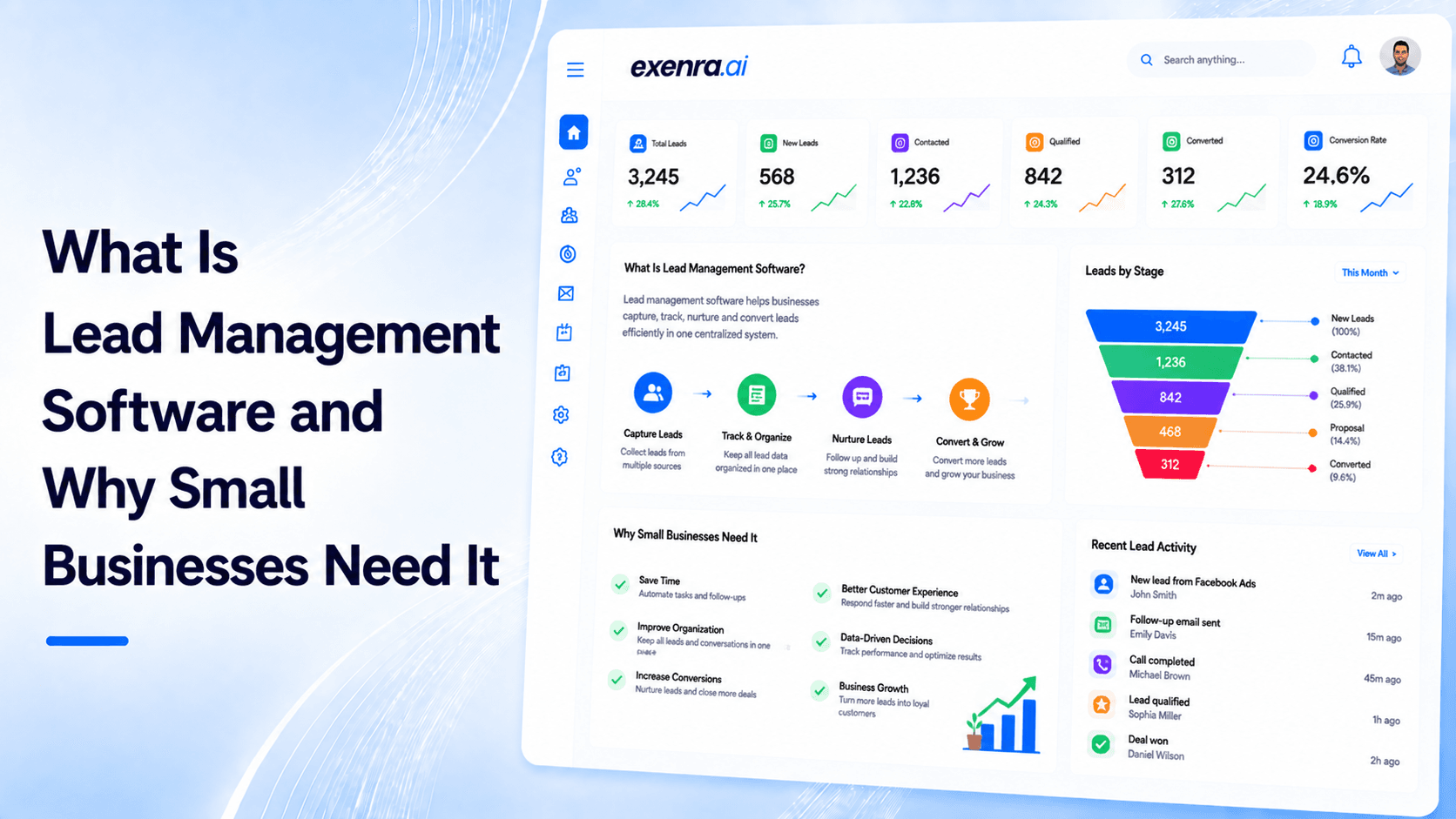
What Is Lead Management Software and Why Small Businesses Need It
This blog explains what lead management software is and how it helps small businesses capture, organize, assign, follow up with, and track leads more effectively. It also covers common mistakes, key features, and how Exenra helps businesses improve response time, team performance, automation, and conversions without using complicated CRM systems.
Read more